
Tesla Model S: Door Assembly - Front - LH (Remove and Replace)
Tesla Model S (2012-2026) Service Manual / Closures / Door Assembly - Front - LH (Remove and Replace)
Removal
- Position vehicle with clear access to door assembly.
- Remove sill panel trim (refer to procedure)
- Disconnect door harness connectors (x3) from dash wiring harness.
- Support door on stand. Caution: Take care not to damage component(s).
- Mark installed positions of hinge to 'A' pillar to aid installation.
- Remove bolts (x6) securing door hinges to body (torque 31 Nm).
Note: Components have been removed in this graphic to aid clarity.
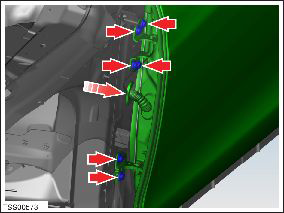
- With assistance release harness grommet from 'A' post.
- Carefully withdraw door wiring harness. Caution: Take care not to damage component(s).
- Remove door and position aside to prevent damage.
Caution: Protect exterior paint surfaces during this procedure.
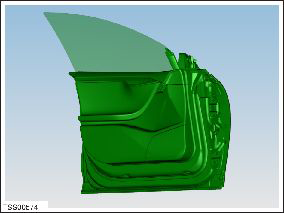
- Installation procedure is the reverse of removal, except for the following:
- Install door and set hinges to witness marks. Check door alignment, adjust if required.
READ NEXT:
 Latch - Door - Front - LH (Remove and Replace)
Removal
Remove front door trim panel (refer to procedure)
Remove screws (x2) securing door latch assembly to reinforcement
(torque 10 Nm).
Latch - Door - Rear - LH (Remove and Replace)
Removal
Remove the rear seat cushion frame (refer to procedure).
Remove the rear sill trim panel (refer to procedure).
Release the carpet and sound insulation from the rear seat
m
Striker - Door - Front - LH (Remove and Replace)
Removal
Open door.
Remove countersunk screws (x2) securing striker plate to 'B'
pillar (torque 22 Nm).
Note: Note installed position of components before
removal.
SEE MORE:
Pipe - High Pressure - Sub-Cool Condenser to Chiller (Remove and Replace)
Removal
Recover refrigerant from the vehicle (refer to procedure)
Remove front skid plate (refer to procedure)
Remove nut (x1) securing pipe to sub-cool condenser (torque 8
Nm).
Remove nut (x1) securing pipe retaining plate to TXV (torque 12
Nm).
Brake Caliper - Rear - Park Brake - LH (Remove and Replace)
Note: If the event of a
stuck caliper or motor failure, refer to one of these procedures to
release the caliper:
Rear Park Brake Caliper - Caliper Seized/Motor Failure - Release
Caution: This method
requires replacing the caliper after it has been released.
© 2019-2026 Copyright www.tesms.org
