
Tesla Model S: Brake Pedal (Remove and Replace)
Tesla Model S (2012-2026) Service Manual / Instrument Panels and Pedals / Brake Pedal (Remove and Replace)
Removal
- Remove the brake light switch (refer to procedure). Caution: The brake light switch is a one time use component. Ensure that a new switch is used during reinstallation.
- Remove the spring clip from the clevis pin.
- Depress the brake pedal for clearance and remove the clevis pin.
- Remove the nuts (x4) that secure the pedal to the brake booster assembly (torque 23 Nm).
- Remove the bolts (x2) that secure the brake pedal assembly to
the brake pedal reinforcement panel (torque 13 Nm). Remove the brake
pedal from the vehicle.
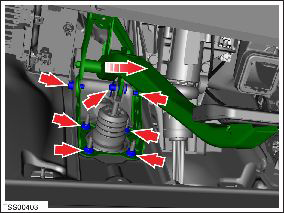
Installation procedure is the reverse of removal, except for the following:
Caution: Replace all nylon-insert locknuts.
Verify the correct operation of the brake lights.
READ NEXT:
 Accelerator Assembly (Remove and Replace)
Removal
Remove the driver's footwell cover:
Left-hand drive (LHD) vehicles: Refer to
procedure.
Right-hand drive (RHD) vehicles: Refer to
procedure.
Glove Box (Remove and Replace)
Removal
Remove the RH lower instrument panel (refer to procedure)
Remove the lower glove box panel by releasing the trim clips
(x6).
Glove Box - Latch Release (Remove and Replace)
Removal
Remove glove box assembly (refer to procedure)
Remove screws (x3) securing latch release module to glove box
assembly.
SEE MORE:
Using the Lap Timer
When you enable Track Mode, the map displays a Lap
Timer. Follow the onscreen instructions to place a start/
finish pin on the map. Once the pins are placed, press
START to initiate the driving (lapping) session. When
you drive Model S through the start/finish location, the
Lap Timer automatical
Autopark canceled
Take control
Autopark has been canceled. You need to park or finish parking your vehicle
manually.
Once the parking maneuver is complete, apply the brakes and shift into Park.
Your vehicle will otherwise remain free-
rolling.
Autopark can be canceled due to many factors, including the following:
© 2019-2026 Copyright www.tesms.org
